
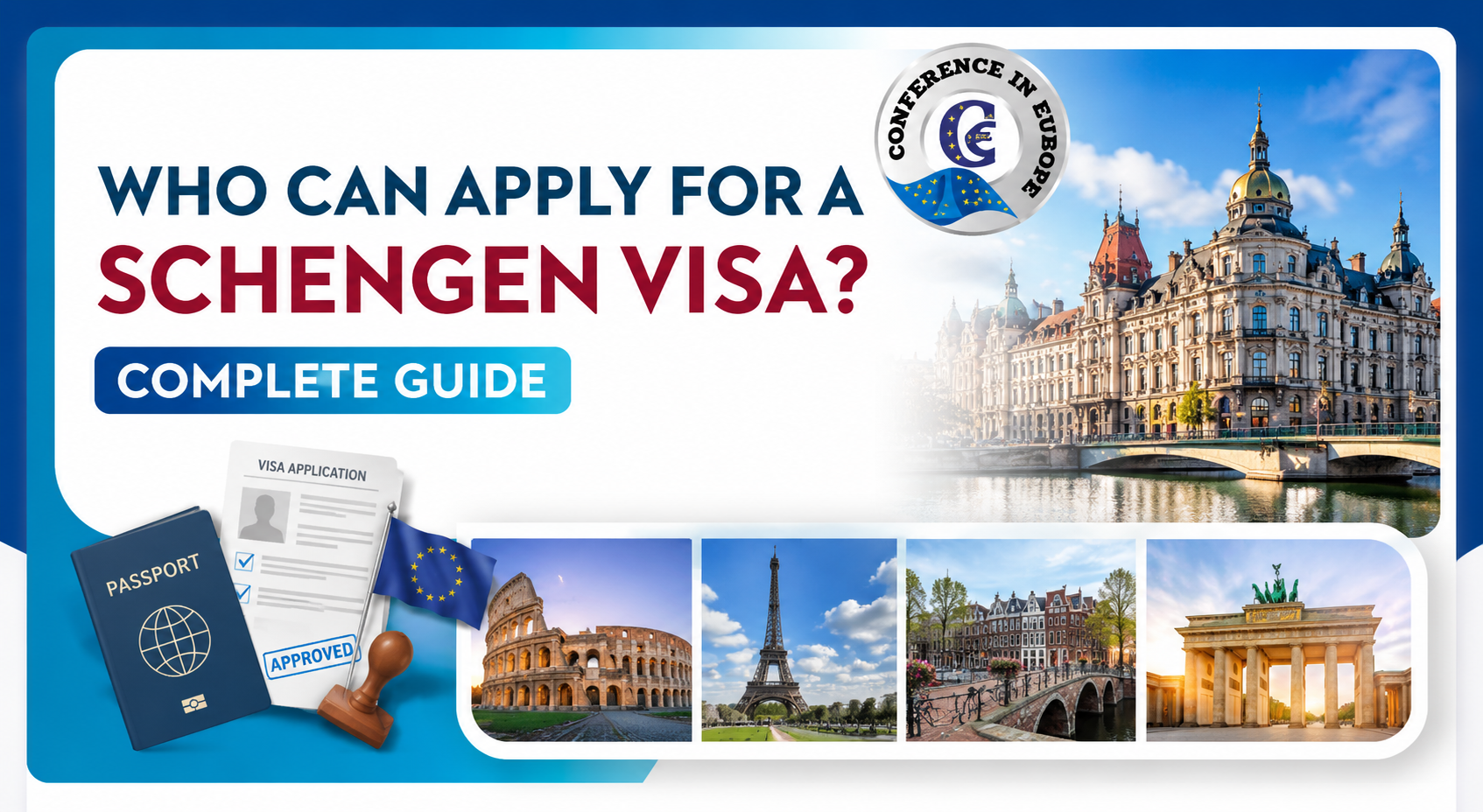
Who Can Apply for a Schengen Visa? Complete Guide
Anyone planning to visit the Schengen Area for tourism, business, conferences, studies, research, medical treatment, or family visits may be eligible, depending on their nationality and travel purpose. This complete guide explains who can apply for a Schengen Visa, the eligibility requirements, required documents, visa types, and the application process to help you prepare confidently.
Many first-time travellers make mistakes, which results in visa rejections. In this article, we will guide you on every single detail, including Schengen visa eligibility, documents required, and the process. Also, keep reading to know who can apply for a Schengen visa.
What is a Schengen Visa?
A Schengen Visa is a long or short-stay visa Europe that member countries of the Schengen Area issue to travellers, visitors, businesses, and professionals. Under this visa, you are allowed to enter the Schengen Area to attend conferences, meetings, tourism, family visits, or other purposes, but you are not allowed to engage in paid work.
Usually, the validity of a Schengen visa is up to 90 days, with single, double, or multi-entry options. If you hold a passport of a country exempt from a visa, then you need a visa to travel to the Schengen Area.
Who Can Apply for a Schengen Visa?
Anyone who is not a citizen of a country that falls under the Schengen area can apply for a visa if planning to travel in Europe.
Here is a list of people who can apply for a Schengen visa:
- Travellers – Individuals who are planning to visit Schengen countries like Germany, France, Finland, the Netherlands, etc., for leisure, sightseeing, cultural experiences, or personal exploration.
- Tourists – People traveling to Europe and Schengen destinations for holidays.
- Businessmen – Entrepreneurs, executives, managers, investors, policymakers, and business professionals who need to travel to attend meetings, negotiations, trade fairs, or corporate events.
- Conference Attendees – People who are participating in international conferences, seminars, workshops, and industry events organized in Schengen countries.
- Researchers – Academics, researchers, and professionals who are planning to attend research events in Europe or participating in collaborative studies with European institutions.
- Students – Individuals who are attending short-term study programs, training programs, academic exchange programs, or educational workshops in the Schengen Area.
- Investors – Business investors and entrepreneurs who are investing in a business or a project, joint ventures, expanding their market, or starting a new business in Europe
Who Does Not Need a Schengen Visa?
EU/EEA Citizens: Citizens of countries in the EU and EEA can freely travel, work, or study in the Schengen States without needing a Visa.
Citizens of visa-exempt countries: You can travel without a visa if you are from a country that has a travel agreement with the Schengen. For instance, U.S., Canada, Australia, Japan and New Zealand citizens are free to travel for up to 90 days within 180 days of their arrival in a Schengen country.
Special exemptions: Some travellers may be exempt from visa requirements based on their country, status, or travel frequencies. This includes people with valid Schengen residence permits, long-stay national visas, and diplomatic or official passports.
Main Eligibility Requirements
Check out the Schengen visa requirements:
Valid passport
You must have a valid passport with at least 3 to 6 months’ validity from the date of departure from the Schengen territory. Also, there should be at least 2 blank pages in your passport. Note that passports issued more than 10 years ago will not be accepted.
Travel purpose
You must clearly define or tell the reason for your visit, such as tourism, business, attending a conference, visiting family, medical treatment, etc. Also, for proof, you need to provide supporting documents.
Proof of funds
You need to show proof of funds to support your stay in Europe. Here is what you need:
- Original, signed and stamped bank statements of the last 3 months.
- Original, signed letter by the sponsor (if any) showing funds, relationship proof, and stay arrangement.
- Income tax returns for the last two years.
- Last three months’ salary slips, if applicable.
- Self-attested photocopy of the Permanent Account Number (PAN) card.
Travel insurance
You also need travel medical insurance with the required minimum coverage, which you can check on the official Schengen visa site.
Accommodation proof
Being a traveller, you need to provide evidence of where you will stay during your visit, such as hotel reservations, rental bookings, or an invitation letter from a host residing in a Schengen country.
Types of Schengen Visas
Here is the type of Schengen visa, and it explains who needs a Schengen visa:
Type C visa / Short stay visa/ Tourist visa
The Type C, which is also a short-stay or tourist visa Europe is one of the most common types of visa for entering Europe. It allows you to travel to one or all of the Schengen countries for up to 90 days in any 180-day period.
Business/Work/Student Visa
This can be either a Type C visa or a Type D visa, depending on your requirement to stay in Europe. Type C is for short stays, and Type D is for long stays. So if you’re not just exploring Europe but rather going to a business meeting, to work, or to study, you can choose a visa type as per your need.
Conference visa/ Short stay visa
A Conference Schengen Visa is nothing but a short-stay visa or Type C visa that allows you to attend international conferences, seminars, workshops, symposiums, or professional events. To apply for this visa, you need to provide an invitation letter and registration confirmation from the conference organiser.
Medical Visa
It is granted to individuals travelling to Europe to receive medical treatment, consultations or specialised health services. For this, you need to submit the evidence of required medical documentation as well as confirmation of your appointment and adequate funds to pay for treatment.
Single-entry visa
A Single-Entry Schengen Visa gives you travel authorization Europe only one time during that visa’s validity period. The visa becomes invalid the moment you leave the Schengen area, regardless of the number of days remaining on it.
Multi-entry visa
This visa type allows entry and exit into and out of the Schengen area multiple times while your visa is still valid. A multiple-entry Schengen visa is very beneficial for those who travel to Europe often for business, attending conferences, or other reasons.
Required Documents for Application
Here are some important documents you need to fulfil visa eligibility criteria and for the application:
- Copy of your passport
- Residence and income proof
- A duly completed and signed Schengen visa application form
- Two recent passport-sized photos according to specific Schengen visa photo dimension requirements
- Schengen travel insurance
- Your itinerary
- Proof of sufficient funds, purpose of the trip, and accommodation (if applicable)
- NOC from your employer or university
Step-by-Step Schengen Visa Application Process
Here are the complete steps to Schengen visa guide:
- Step 1: Find your visa type depending on your purpose of travelling
- Step 2: Identify the right country to apply for visa, most times it is the country where you are travelling to attend meetings, for treatment, etc.
- Step 3: Complete the Schengen visa application form online
- Step 4: Gather the required documents and book a visa appointment online
- Step 5: Attend appointment, provide biometric data, and pay visa fees
- Step 6: Wait for Schengen visa approval
Common Reasons for Visa Rejection
- Incomplete application form (missing information or not signed) – This will result in your application being denied.
- Unable to show sufficient funds to pay for the trip and living expenses during your stay.
- Missing supporting documents like bank statements, invitation letters, travel bookings, hotel bookings, etc.
- Wrong insurance that doesn’t comply with the coverage required by the Schengen Area.
- No strong ties to your country of origin.
- Listed as an overstayer or violator of Immigration Regulations or laws.
Tips to Improve Approval Chances
- Apply well in advance to get visa approvals on time and to avoid any last-minute rush for document gathering.
- Make sure you fill out the application form correctly
- Focus on your name spellings and other personal information you mention in the form
- Every single detail in application form should match exactly your passport and other official documents
- Book flights and accommodation with cancellation facility to attach to your application form
- Provide sufficient funds proof to cover your stay. Calculate it like 100 Euros per day.
- Don’t lie about anything in an application or a job interview
- Create an impactful cover letter that ensures your reason to come back to your home country
- Don’t miss any required documents
- Follow immigration guidelines carefully when applying for a Schengen visa
Conclusion
The Schengen visa allows you to easily travel throughout Europe without having to apply for visas separately for each country. This is a great option for many types of travellers be it tourists, business travellers, conference attendees, researchers, students, and other qualifying individuals.
To maximise your chances of getting approved for a Schengen visa, it is important to know what the eligibility criteria are, what type of visa you need, and how to get all supporting documents together for your application.
FAQs
Can anyone apply for a Schengen visa?
Yes, anyone can apply for a Schengen visa for travelling, attending conferences, business meetings, medical treatment, and visiting family.
What documents are required?
You will need a valid passport with at least 3 to 6 months’ validity, proof of funds, accommodation bookings, flight tickets, a passport-size photograph, an invitation letter if applicable, and a sponsorship letter if applicable.
How long does approval take?
Approval may take from 1 to 2 months, depending upon your application. Sometimes, due to busy schedules and public holidays, approval may take 2 months.
Can I visit multiple countries with one Schengen visa?
You can visit multiple European countries with a single Schengen visa.
Enjoyed the read? Share it on…


Top Conference Updates in Europe (2025)




Stay Updated on Top Conferences in Europe!
Subscribe to get the latest updates on upcoming academic conferences across Europe, covering engineering, medicine, business, AI, and more. Delivered straight to your inbox!
Get Conference Alerts