
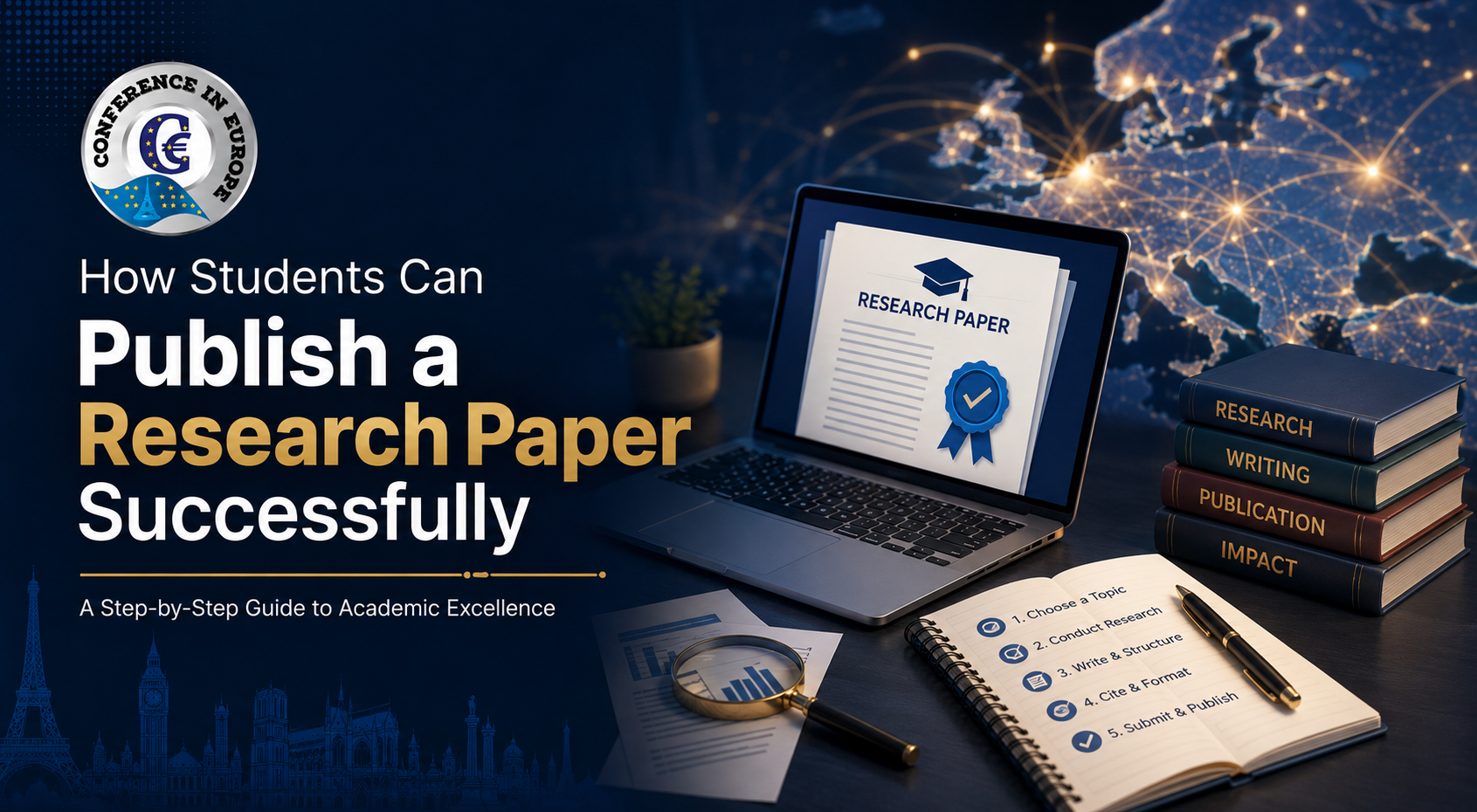
How Students Can Publish a Research Paper Successfully?
Publishing a research paper is highly beneficial for undergraduate and postgraduate students. It helps them present their unique findings to a global audience, and, in exchange, they gain academic credibility, recognition, and numerous growth opportunities.
If you are a student looking to publish a research paper in a reputable journal, this guide is for you. In this article, we will explain important academic publishing tips and how to avoid common mistakes.
Why Research Publication Matters for Students
Research paper publication as a student has many unique benefits:
- Improve your research and writing skills based on the feedback on your work.
- Understand the scholarly publication process at an early stage in your career.
- Connect with professionals and researchers in your field to fininternational academic conferences opportunities for collaboration and future research.
- Having a published research paper adds academic credibility, reflects your leadership drive, and professionalizes your resume. This leads to better career opportunities in future.
- If your paper is featured in a Scopus-indexed journal, you will gain massive global visibility.
How to publish a research paper [Step-by-Step Answer]
To ensure that your research paper submission is successful, here are the important steps to follow:
Choosing the Right Research Topic
The topic you choose shapes the outcome of your research project. Ideally, choose the topic that you are really passionate about and interested in. Research work requires patience, lots of brainstorming, and revisions. So, it’s best to choose a topic you genuinely care about.
A topic that has been researched endlessly brings no value unless you bring a new value. Spend some time in a literary review, studying credible journals, Google Scholar, or repositories to discover what’s missing.
Finally, avoid a topic that is too narrow or too broad. Consider targeted geographics, demographics, and temporal factors when evaluating the scope of your research topic. Also, make sure the topic is feasible and has both academic and publication relevance.
Understanding Journal Requirements
Every journal has unique guidelines and requirements. If your research paper doesn’t comply with the specific journal publication process, even an impressive paper can get rejected. So, make sure you carefully read the journal’s guidelines long before you even start writing, so you can ensure alignment right from the initial stage. So, check policies related to authorship, redundant publishing and plagiarism, open access, copyright, and general guidelines.
How to Structure a Research Paper
Research paper formatting and structuring are as important as the content itself. If your manuscript is organized well, it will help readers to understand your study and enable reviewers to evaluate your work efficiently. This improves your chances of getting it published in a journal. To achieve this, you need to put a lot of thought into the logical flow of the ideas presented.
Make sure each section of your student paper has a clear goal. Before starting to write, you should review the journal’s author guidelines and format of recently published papers to determine how they have structured their papers. Be consistent in your headings, present your arguments in an organized manner, and maintain smooth transitions between sections.
Writing a Strong Abstract and Conclusion
Both the abstract and the conclusion are usually the most widely read parts of a student research paper. They can vastly influence the perception of your research and affect a reader’s decision as to whether or not to read through the remaining sections of the paper.
The reader should find in the abstract a clear, brief summary of the research problem, methods, major findings, and major contributions without irrelevant details or citations. The conclusion typically summarizes the findings in order, emphasizes the significance of the findings, and suggests future research directions.
Students must refrain from adding new material into these sections, but focus on clarity, conciseness, and impact. Revising the abstract and conclusion after completing the paper often leads to a stronger and more coherent manuscript.
Avoiding Plagiarism in Research Papers
Academic Integrity is an important element of successful research publication. Plagiarism, whether intentional or inadvertent, may lead to rejection of the manuscript. It also causes reputation damage and diminishes the overall credibility of your work. Researchers must develop the habit of consistently and accurately citing all sources, using quotation marks when reproducing exact text, as well as paraphrasing ideas from other authors and acknowledging those authors.
In addition, researchers must document all references as they develop their work and use a plagiarism-detection tool to assess their content for potential issues before submitting their research paper. Research conducted with ethical writing practices will enhance the overall quality and credibility of your research.
Selecting the Right Journal for Submission
There are several factors students should consider when choosing a journal to publish a research paper. These include journal scope, readership, impact, indexing status, and publishing policies.
Reviewing recently published articles can help assess the journal’s interests and standards. Additionally, authors must be aware of predatory journals that do not employ rigorous peer review. By carefully selecting peer-reviewed journals, an author increases their chances of publication and helps reach the target audience.
Common Reasons Research Papers Get Rejected
- If your research topic doesn’t fit the journal’s scope, the editor may reject it without peer review.
- Lack of originality or uniqueness, insufficient sample size, and inappropriate analysis demonstrate that the study offers little to no new knowledge.
- Poor writing quality and improper formatting with grammar issues and confusing arguments make it tough to assess the paper and may lead to rejection.
- An inadequate literature review of relevant past studies indicates a poor understanding of the discipline and diminishes the study’s contribution.
- Plagiarism, ethical violations, and data manipulation result in immediate rejection.
- Conclusions that overstate or are inconsistent with the research results raise significant concerns about the reliability of the research.
- Even a single deviation from journal guidelines may lead to immediate rejection.
Tips to Improve Publication Success
Here are the most important academic publishing tips students should keep in mind:
- Choose an appropriate journal that matches your topics
- Make sure the introduction is clear, compelling, and relevant
- The literature review should provide a conceptual grounding for the research questions.
- Begin drafting as soon as possible with clear documentation of the methods, results, and references used.
- Adhere to the specific guidelines (including formatting and submission policies) of the target journal.
- Make sure that you clearly display your results using well-labelled tables, figures, and concise explanations.
- Have a professor, mentor, or senior student review your paper prior to submission.
- Proofread your paper several times for grammatical errors, clarity, citation accuracy, and consistency.
- Treat a rejection as an opportunity to improve your paper. Revise your work thoroughly, resubmit it, and never give up.
Conclusion
Publishing a research paper is an excellent endeavour for students’ academic and professional growth. Be sure you follow important academic publishing tips and pay attention to research paper formatting to increase the likelihood of your paper’s acceptance. Hopefully, our guide helps you achieve your research publishing goals and sets you on the path to success in your field.
FAQs
Can students publish research papers?
Yes, many reputable peer-reviewed journals, academic journals and university repositories accept research papers from undergraduate and postgraduate students.
Can high school students publish research papers?
Yes, many reputable journals accept research papers from high schoolers if the research meets the journal’s standards and truly adds a unique value to the discipline.
How to publish a research paper as a student for free?
To publish a research paper for free, choose open-access journals, request a fee waiver, or submit to undergraduate journals that are usually free. Alternatively, if you have the opportunity to submit your work to academic conferences, you can present your research and have it published in indexed conference proceedings.
Enjoyed the read? Share it on…


Top Conference Updates in Europe (2025)





Stay Updated on Top Conferences in Europe!
Subscribe to get the latest updates on upcoming academic conferences across Europe, covering engineering, medicine, business, AI, and more. Delivered straight to your inbox!
Get Conference Alerts